
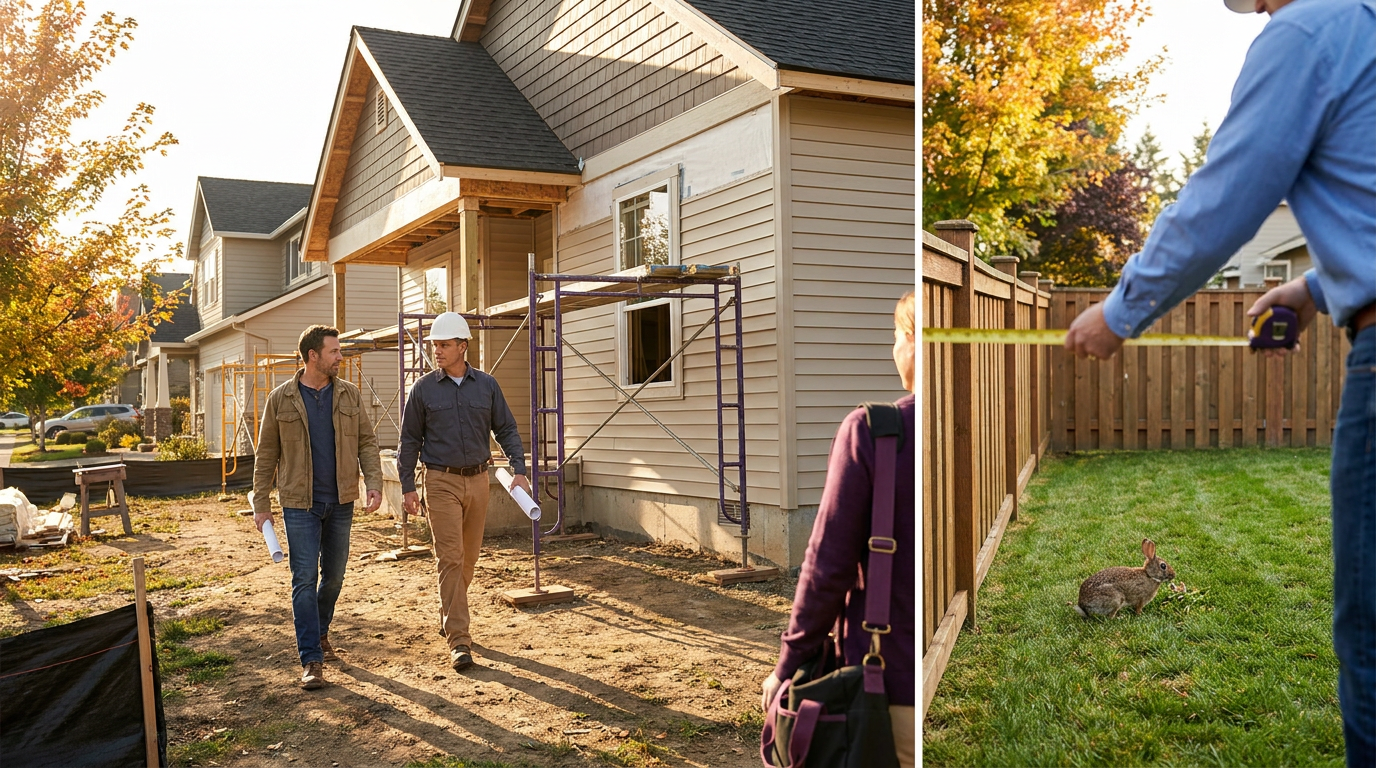
Bridge Loans: Understanding after-repair value and how rehab budgets undergo lender scrutiny is vital for real estate investors using short-term financing. Lenders calculate after-repair value by pairing an independent appraisal of current property condition with a detailed, line-item renovation schedule. This projected valuation dictates maximum loan amounts, required borrower equity, and construction holdback reserves. Private lenders scrutinize labor-material breakdowns, municipal permitting needs, and comparable sales before approving draws, ensuring that capital outlays directly support market value.
Securing short-term capital through construction loans or bridge financing requires treating your scope of work as an underwriting document rather than an informal estimate. Underwriters use construction risk desks and third-party appraisal reviews to verify whether your proposed improvements justify your projected valuation. Preparing your schedule of values properly helps prevent delayed draw disbursements, unexpected capital calls, or sudden reductions in leverage.
How lenders define and calculate after-repair value (ARV)
After-repair value represents the hypothetical market value of a distressed or dated residential property once all planned renovations are completed in a professional, workmanlike manner. It is not an arbitrary target set by the investor or listing agent; it is an appraiser-certified valuation based on specific future conditions.
When underwriting an asset, bridge lenders establish two core loan ratios:
- Loan-to-Cost (LTC): The total financing package—including initial purchase funds and escrowed renovation dollars—divided by the total cost basis (purchase price plus total rehab budget).
- Loan-to-After-Repair-Value (LTARV): The total facility balance divided by the appraiser's completed ARV.
Lenders cap their commitments at the lower of these two constraints. For example, if a lender offers up to 85% LTC but caps leverage at 70% LTARV, an insufficient ARV appraisal will immediately reduce the approved loan amount. This dynamic forces the borrower to bring additional equity to the closing table.
Because valuation relies heavily on macro construction and renovation activity, lenders track broader market trends. According to the U.S. Census Bureau, total private residential construction spending encompasses both new single-family structures and major home improvements, reflecting ongoing capital demand in residential redevelopment across the country.
Breaking down the schedule of values for construction underwriting
Underwriters review construction scopes using standard risk metrics. If your submission lists broad lump sums—such as "$40,000 for full interior renovation"—the credit desk will reject the document or drastically discount the projected valuation. Institutional risk analysts require an itemized schedule of values that separates labor from materials and defines specific project milestones.
A thorough schedule of values categorizes work into distinct trade divisions:
- Site work and demolition: Debris hauling, selective interior demo, dumpster rentals, and hazardous material remediation.
- Structural envelope: Roof decking and shingling, foundation repairs, exterior siding, framing modifications, and exterior window replacements.
- Mechanical, electrical, and plumbing (MEP): Service panel upgrades, full rewiring, rough-in plumbing, supply line replacements, and HVAC condenser and furnace installations.
- Insulation and drywall: Code-compliant thermal insulation, wallboard hanging, taping, floating, and texturing.
- Interior finishes: Solid-wood or manufactured cabinetry, stone or laminate countertops, floor coverings, interior doors, trim carpentry, and paint.
- Exterior surfaces and landscaping: Driveway paving, perimeter fencing, grading, exterior lighting, and sod installation.
Data tracked by the Federal Reserve Bank of St. Louis (FRED) illustrates ongoing volatility in construction material costs, which reinforces why lenders require contingency reserves in project scopes. Bridge underwriters generally look for a dedicated contingency line of 10% to 15% on cosmetic updates and up to 20% on complex structural builds to cushion against unexpected field conditions without requiring a loan modification.
Contractor verification, licensing, and insurance standards
Underwriters evaluate the parties performing the physical renovation just as rigorously as the asset itself. While minor cosmetic refreshes under modest budget thresholds may allow for experienced self-contracting, significant renovations require an independent, licensed general contractor (GC).
When reviewing a GC, construction risk desks assess four core elements:
- Licensing status: The general contractor must hold an active license in the municipality or state where the subject property is located, with no unresolved disciplinary sanctions on record.
- Liability coverage: The GC must supply an active certificate of insurance for general liability coverage naming the lender as an additional insured and certificate holder.
- Track record and capacity: The GC must demonstrate prior completion of projects with similar budgets and scopes, verifying they have the operational bandwidth to manage the build without stalling.
- Executed prime contract: The signed construction agreement between the investor and the contractor must match the line-item schedule of values submitted to underwriting penny-for-penny.
If you plan to retain the completed asset inside an entity rather than sell it immediately, consult our resources on the Simply Approved Mortgages blog to understand how entity documentation and contractor agreements integrate with corporate borrowing requirements.
Appraisal methodology: As-is versus subject-to-completion valuations
To establish ARV, the lender orders a comprehensive appraisal inspection from an independent appraisal management company (AMC). The appraiser conducts a two-stage evaluation:
The as-is valuation
The appraiser inspects the property in its current state, noting deferred maintenance, code violations, structural damage, and non-functional mechanical systems. They gather sales comps of unrenovated or distressed properties nearby to establish the baseline "as-is" market value. This figure determines whether the purchase price reflects fair market value.
The subject-to-completion valuation
The appraiser reviews your exact scope of work, material selections, and proposed architectural drawings. Operating under the hypothetical condition that all work described in the budget is fully completed, the appraiser identifies three to six recent closed sales of properties within the immediate market that display comparable square footage, lot utility, and finish quality.
Appraisal review desks verify that chosen comparable properties meet strict underwriting standards:
- Proximity: Comps should be located within the same neighborhood or subdivision, avoiding crossings over major municipal boundaries, rail corridors, or multi-lane expressways.
- Recency: Sales should ideally have closed within the previous 90 to 180 days to reflect current interest rate and housing conditions.
- Physical similarity: Comps must closely align in above-grade gross living area, bedroom and bathroom counts, and basement utility.
Draw schedules and construction escrow holdbacks
Bridge loans do not disburse renovation funds in a lump sum at the closing table. Instead, the approved construction budget is placed into a lender-controlled construction escrow holdback account.
Lenders disburse funds through sequential reimbursement draws as work reaches defined completion milestones:
- Initial self-funding: The investor pays the contractor to complete the initial phase of work using their own working capital.
- Draw request submission: Once a distinct phase is finished—such as all rough-in mechanicals—the borrower submits a formal draw request detailing the completed line items.
- Third-party inspection: The lender dispatches an independent inspector to photograph the site, inspect the work in place, and verify that the specified materials are installed.
- Lien waiver collection: The contractor signs conditional or unconditional lien waivers confirming that sub-tier contractors and material suppliers have been paid.
- Escrow release: The lender wires the verified draw amount from the holdback account directly to the borrower or GC, replenishing the investor's working capital for the subsequent phase.
Investors must maintain sufficient liquid reserves outside of their loan closing down payment to float each trade phase until the draw inspection clears.
Refinancing your completed project into permanent financing
For investors executing the Buy, Rehab, Rent, Refinance, Repeat (BRRRR) strategy, the bridge loan serves purely as temporary debt. The long-term exit relies on transitioning into permanent rental property debt.
Using our rental property deal analyzer allows you to model both phases of the capital stack before acquiring the property. Once your renovation is completed, municipal permits are closed out, and a qualified tenant is placed, you can replace your short-term debt using long-term DSCR loans.
Reviewing DSCR loan requirements early in your renovation planning ensures your post-rehab lease rate supports the required debt service coverage ratio. You can run your expected rental cash flow through our DSCR calculator to confirm that projected net rental income comfortably covers principal, interest, taxes, insurance, and association dues (PITIA).
When market equity increases significantly post-renovation, investors often leverage a DSCR cash-out refinance to retire the bridge facility and recapitalize their balance sheet. Because cash-out proceeds represent borrowed funds rather than income, consult a qualified tax professional regarding their specific tax treatment for your situation.
Worked example: Purchase price, rehab holdback, and exit math
The following illustrative scenario illustrates how an acquisition price, rehab budget, and ARV interact during underwriting and subsequent refinancing.
Project baseline
- Acquisition purchase price: $220,000
- Underwritten rehab budget: $60,000 (100% held in construction escrow)
- Appraiser-certified ARV: $360,000
- Total project cost: $280,000 ($220,000 purchase + $60,000 rehab)
Bridge underwriting parameters
- Maximum allowable LTC: 85% ($280,000 × 85% = $238,000 maximum total loan)
- Maximum allowable LTARV: 70% ($360,000 × 70% = $252,000 maximum loan ceiling)
- Approved loan facility: $238,000 (constrained by the 85% LTC ceiling)
Capital required at acquisition closing
- Total loan amount: $238,000
- Rehab holdback in escrow: $60,000
- Day-one loan advance for purchase: $178,000 ($238,000 total loan − $60,000 holdback)
- Borrower purchase down payment: $42,000 ($220,000 purchase price − $178,000 advance)
- Estimated lender points, title fees, and settlement costs: $9,200
- Working capital to float Phase 1 construction: $15,000
- Total liquid cash required at closing: $66,200
Long-term DSCR takeout refinancing
Upon renovation completion and tenant occupancy at $2,700 per month, the borrower secures permanent DSCR financing at 75% of the appraised $360,000 ARV: Hypothetical illustrative example only, not an advertised rate, quote or offer of credit. The APR (annual percentage rate) may be higher than the interest rate shown once loan costs are included, and the actual rate, APR, payment and term depend on credit, property, loan amount and lender guidelines.
- New permanent loan amount: $270,000 ($360,000 × 75% LTV)
- Payoff of bridge loan facility balance: $238,000
- Gross loan proceeds returned before closing fees: $32,000
- Estimated monthly PITIA payment: $1,990
- Debt service coverage ratio: 1.35x ($2,700 monthly rent ÷ $1,990 PITIA payment)
Because the DSCR exceeds standard lender benchmarks of 1.20x to 1.25x, the property qualifies cleanly for permanent financing. Ready to explore terms for an upcoming project? Submit your scenario to apply with Simply Approved Mortgages, where our team structures financing options tailored to your investment objectives.
Before committing to a structure, have a licensed loan officer review the rent assumption, the full PITIA payment, loan-to-value, reserve requirements and any prepayment penalty.
Closely related topics are bridge, fix and flip, rental property loan, investment property financing, DSCR loan vs conventional investment loan, rental property cash-out refinance, loan for rental property in an LLC, and how much rent do i need to qualify.
Frequently asked questions
How do lenders calculate after-repair value on a renovation property?
Lenders calculate after-repair value by hiring an independent appraiser to review the property's current as-is condition alongside your contractor's itemized scope of work. The appraiser identifies recent closed sales of similar properties in the immediate neighborhood that already reflect the proposed level of finish, generating an appraisal report based on the hypothetical completion of the planned improvements.
What is a construction escrow holdback and how is it disbursed?
A construction escrow holdback is the portion of your loan facility allocated for renovations that the lender retains in an escrow account at closing. As work progresses, the borrower submits draw requests for completed milestones. The lender releases funds in increments after an independent site inspector verifies the installation and the contractor submits appropriate lien waivers.
Can real estate investors act as their own general contractor?
Whether an investor can self-contract depends on the lender's guidelines and the scope of work. For cosmetic updates with small budgets, some lenders permit experienced investors to act as owner-builders. However, for structural modifications, additions, or major MEP overhauls, lenders typically require a licensed, insured third-party general contractor with an active municipal license.
What happens if construction costs exceed the initial rehab budget?
If material price increases or unexpected site conditions cause expenses to exceed the approved budget, the borrower is responsible for covering the shortfall out of pocket. Lenders do not automatically expand loan facilities mid-project. Carrying a dedicated 10% to 20% contingency line item in your initial budget provides a vital buffer against out-of-pocket capital calls.
How does a DSCR loan refinance work once renovations are complete?
Once physical renovations are finished and a tenant is placed under a qualifying lease, the investor applies for a permanent DSCR loan to pay off the interim bridge facility. The DSCR underwriter evaluates the property's gross rental income against its full monthly housing payment (PITIA) rather than using the borrower's personal income or tax returns to determine debt service coverage.
Sources
This government publication is cited for market and program background only. Business-purpose investor loans are private products that are not government-insured and are not governed by HUD, FHA or Fannie Mae rules; their terms are set by the individual lender. Simply Approved Mortgages LLC (NMLS #2620881) is a mortgage broker and is not HUD, FHA, or the CFPB, and is not affiliated with or endorsed by any government agency.
More from this guide series
Published articles from the same research cluster.

Topic guide
Short-Hold Financing for Bridge, Rehab and Flip Projects
Bridge and rehab loans provide short-term capital to acquire and renovate properties before refinancing into a long-term DSCR loan or selling for profit.
Read guide
Investor guide
Bridge Financing to Buy Before the Current Property Sells
Discover how bridge financing to buy before selling an existing investment property provides short-term liquidity to close acquisitions without sales delays.
Read guide
Investor guide
Experience Requirements on Investor Rehab Projects
Learn how wholesale bridge lenders evaluate your completed rehab track record to determine leverage limits, loan-to-cost terms, and interest rates.
Read guide
Investor guide
Holding Costs That Erode a Flip's Margin
Holding costs are ongoing, non-construction expenses like debt service and taxes that accumulate while a property is renovated, marketed, and sold.
Read guide
Investor guide
Planning the Exit: Sale or Refinance Into Rental Financing
Deciding whether to sell a completed rehab or refinance into long-term DSCR debt requires evaluating seasoning rules, appraisal timing, and actual cash yield.
Read guide
Investor guide
Rehab Draw Requests, Inspections and Reimbursement Timing
Understand how fix-and-flip rehab draws work, from submitting line-item invoices to third-party inspections and lender reimbursement turn times.
Read guideContinue your research
Related investor guides

Investor guide
Points versus Lender Credits: How They Change Closing Cash
Learn how discount points vs lender credits shift your upfront closing cash versus ongoing monthly debt service on business-purpose rental properties.
Read guide
Investor guide
Foreign National Investors for DSCR Borrowers
Foreign national investors can successfully manage U.S. rental property from abroad using professional property managers, domestic banking, and DSCR loans.
Read guide
Investor guide
Foreign National Investors: Rental Tax DSCR Financing
Non-resident landlords face mandatory withholding on U.S. rental income. Learn how gross withholding versus net elections impacts cash flow and loan coverage.
Read guide